What is the dark fleet, and why every seafarer should understand it

Updated: Jun 21
Have you ever been offered a tanker job with wages noticeably higher than the going rate for that route or vessel type? That's often the first sign you might be looking at a position on what's now called the "dark fleet," and it's worth understanding exactly what that means before you sign anything.
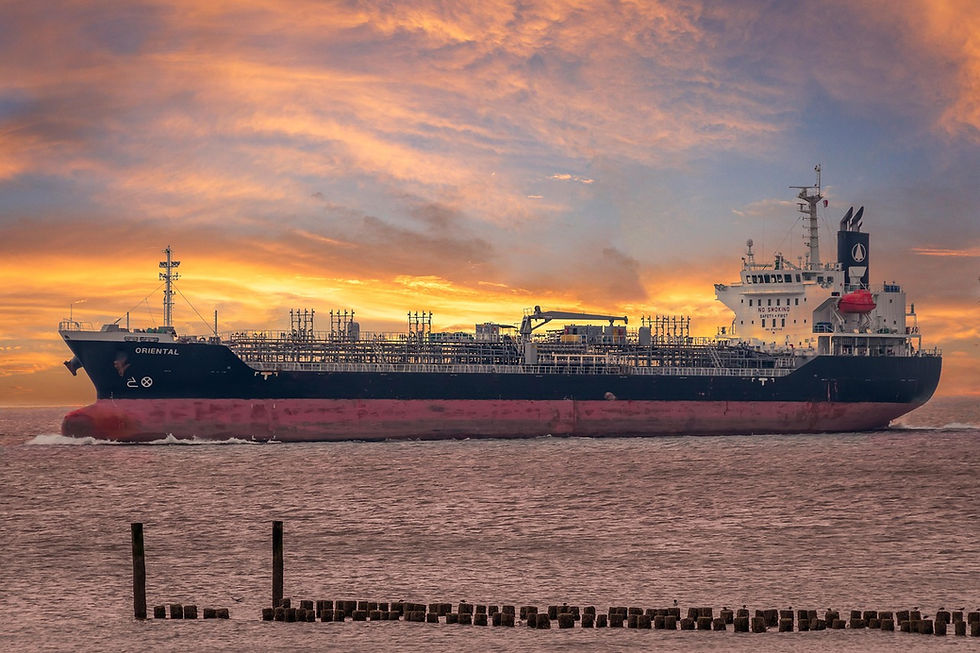
The dark fleet — also called the shadow fleet — refers to tankers that deliberately operate outside normal monitoring and regulatory oversight, most often to carry sanctioned oil from Russia, Iran, or Venezuela. The International Maritime Organization addressed this directly for the first time in an October 2023 resolution, describing a fleet of roughly 300 to 600 tankers — mostly older ships, some not recently inspected, with substandard maintenance, unclear ownership, and a severe lack of insurance. More recent industry estimates put the active count above 450 tankers, and the number keeps growing as sanctions regimes expand.
The core tactic is simple: going dark. Ships disable their AIS transponders, the system that makes a vessel visible on global tracking. A brief shutdown in certain navigational zones can be legitimate. Routine, strategic disabling for most of a voyage is not — that's the behaviour researchers and sanctions enforcement now specifically watch for.
Beyond going dark, the deception runs deeper. Dark fleet vessels frequently carry forged documents, route cargo through ship-to-ship transfers at sea to obscure its origin, and change flag registration or name with unusual frequency. Ownership is often layered through shell companies specifically so no one can easily trace who actually controls the vessel.
This isn't theoretical — enforcement has real teeth now. The US seized the tanker Marinera in the North Atlantic and the Veronica in the Caribbean, among others. The Swedish Coast Guard boarded a 2007-built tanker, the Sea Owl I, in a helicopter interdiction after it was flagged on the EU sanctions list. These aren't rare, isolated incidents anymore — they're becoming routine.
Here's the part that should matter most to you as a seafarer: the risk doesn't stay at the company level — it reaches the crew directly. The master of the Marinera, a Georgian national, was charged in the US and taken there from Scotland by the US Coast Guard, despite a UK court order requiring him to remain in the country. Reports from boarding officers on other dark fleet vessels describe armed security personnel onboard, important paperwork that mysteriously goes missing, and a general lack of cooperation during inspections. If you're the master or an officer aboard one of these ships when enforcement arrives, you are not a bystander to whatever happens next.
There's also a plain physical safety risk. These are disproportionately older, poorly maintained vessels operating with little to no real insurance cover. A handful of incidents in recent years — oil spills, onboard fires, mechanical failures — have already involved dark fleet ships. If something goes wrong at sea on a vessel like this, the safety net you'd normally expect may simply not be there.
A few practical red flags worth knowing before you accept any tanker position:
Pay noticeably above market rate for the role, route, or vessel type, with no clear justification.
Reluctance to clearly identify the actual ship manager or beneficial owner when you ask direct questions.
Instructions or expectations around disabling AIS outside the narrow situations where that's legitimately permitted.
Vague or evasive answers about cargo type, origin, or destination when you ask in the interview or joining process.
A vessel history showing frequent flag or name changes — easy to check before you commit to a contract.
None of this means every higher-paying tanker job is a problem — but it does mean these are exactly the right questions to ask before you say yes, not after you're already onboard.
Thank you for reading this far. If you've sailed on a vessel that showed any of these signs, or have a different firsthand account, I'd genuinely like to hear it — write in with questions or corrections.
Please do share this with colleagues or crew who'd find it useful — this is exactly the kind of thing that's better known before a job offer lands, not after.


Comments